

New publication: Hotspot map of peatland emissions
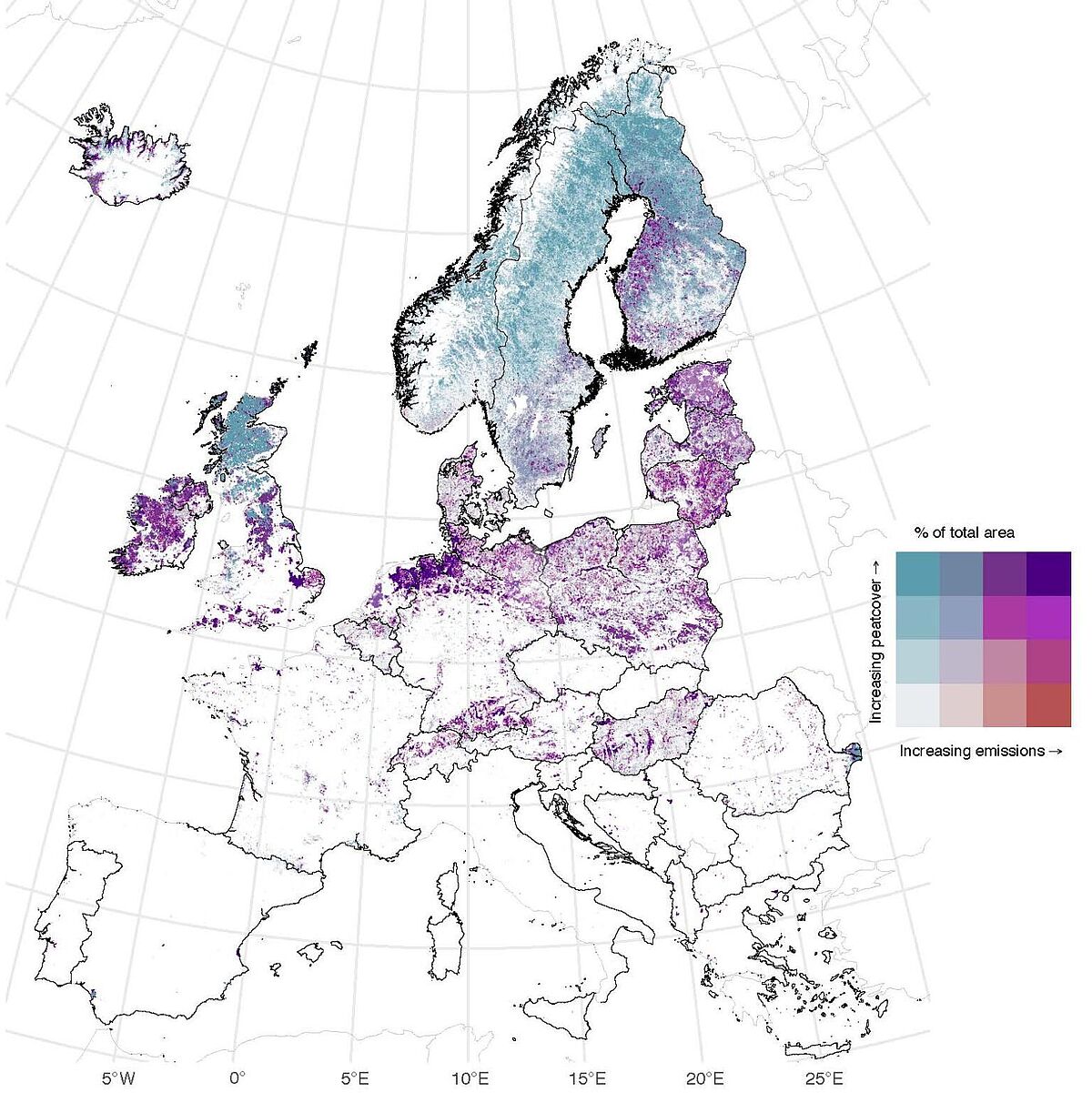
12.12.2025 – WETSCAPES2.0 researchers Dr. Franziska Tanneberger and Dr. John Couwenberg are involved in a study published in Nature Communications showing that drained peatlands in the EU emit significantly more greenhouse gases than previously estimated. For the first time, a high-resolution hotspot map has been developed, mapping emissions from drained peatlands across Europe.
The results show that emissions are roughly twice as high as reported in existing inventories. The map identifies regions where emissions are particularly concentrated and where rewetting can be most effective in reducing them.
Research at Polder Sandhagen: Interview with Prof. Dr. Kreyling
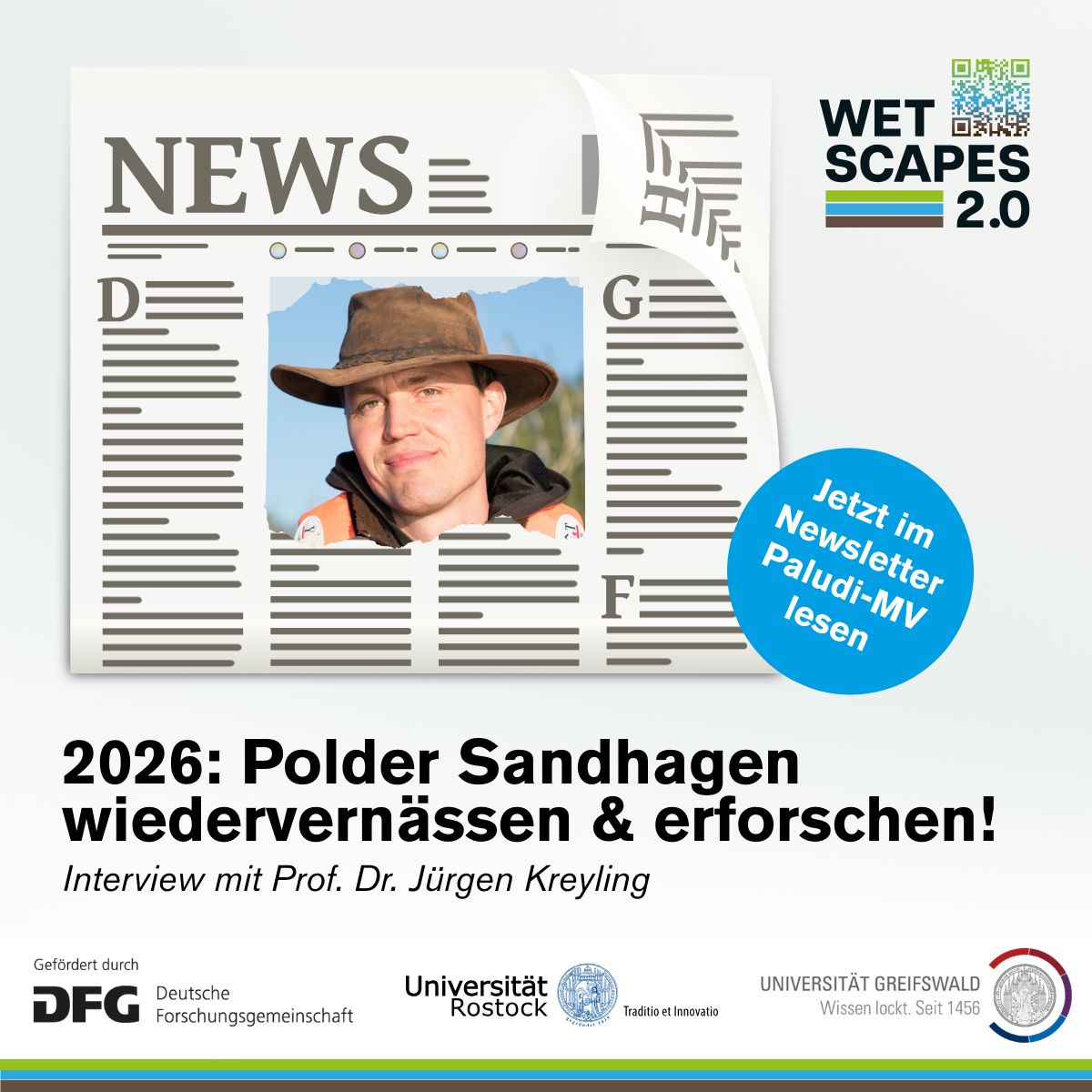
01.12.2025 – An interview with Prof. Dr. Jürgen Kreyling, spokesperson of the Collaborative Research Centre WETSCAPES2.0, has been published in the newsletter of the Paludi-MV project. He discusses, among other topics, the changes that occur when a peatland is rewetted after decades of drainage and why these processes are of central importance for the research within the CRC.
The interview is part of the collaboration between both projects at the Polder Sandhagen site near Neubukow, which is being studied as a landscape-level experiment.
WETSKILLS retreat brings early-career researchers together
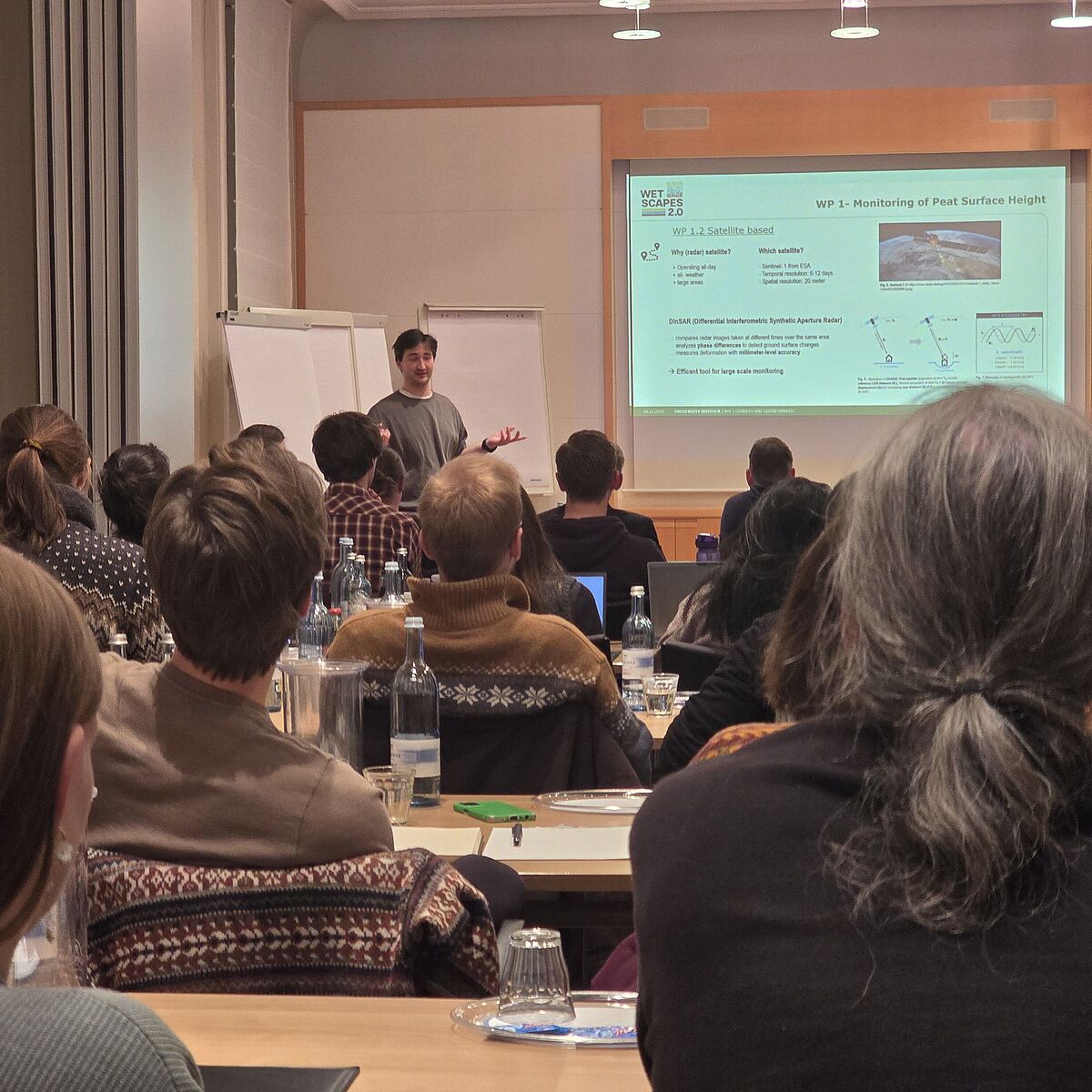
27.11.2025 – As part of the Integrated Research Training Group WETSKILLS, around 30 early-career researchers and project leaders from WETSCAPES2.0 come together for a two-day retreat. The programme centres on contributions by PhD researchers. It is further complemented by workshops, among others on science communication and research ethics.
The retreat is part of the training programme and strengthens interdisciplinary collaboration within the project.
WETSCAPES2.0 at the DAM Parliamentary Evening in Schwerin
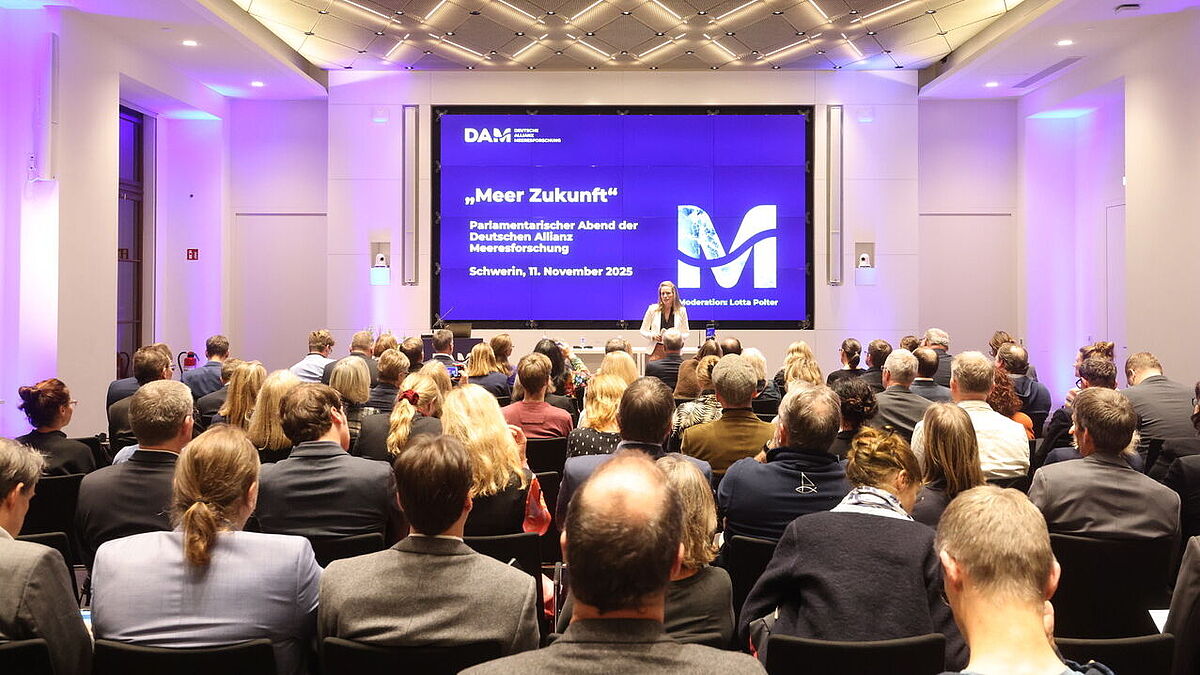
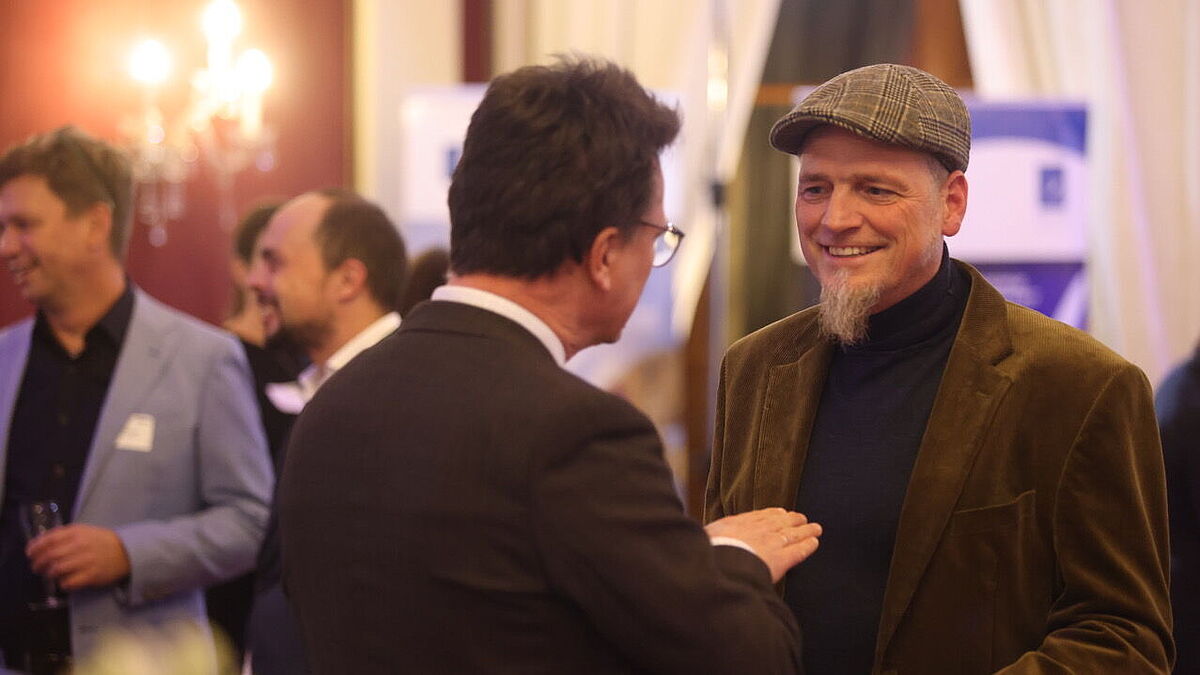
11.11.2025 - At the parliamentary evening of the German Marine Research Alliance (DAM) in Schwerin, representatives from politics, science, business and civil society discuss perspectives for a sustainable future of the Baltic Sea.
WETSCAPES2.0 participates and networks around the role of coastal peatlands as an interface between land and sea. They contribute to coastal protection and reduce nutrient inputs into the Baltic Sea — making them a relevant component of the theme “Meer Zukunft”.
Enthusiasm for WETSCAPES2.0 during visit of MV’s Science Minister Martin

20.08.2025 – Bettina Martin (Minister for Science, Culture, Federal and European Affairs of Mecklenburg-Vorpommern) visits the University of Greifswald and learns about ongoing work within the Collaborative Research Centre.
“The fact that the University of Greifswald has succeeded in establishing WETSCAPES2.0 as a new Collaborative Research Centre shows that the research here is conducted at the highest level,” the minister emphasises.
During a guided tour, she gained insights into research on rewetted fens, including a WETSCAPES2.0 experiment with 108 mini-peatlands in the mesocosm facility.
Screening Site Set Up


15.08.2025 – More than 80 screening sites are currently being established in rewetted fens across Mecklenburg-Vorpommern. The aim is to systematically capture sites along different stages of rewetting. To achieve this, multiple teams are regularly out in the field, installing measurement infrastructure and collecting key data on water levels, peat characteristics, and microbial communities. The setup of the sites is preceded by extensive coordination with authorities and landowners.
The data collected provide a key foundation for understanding the impacts of rewetting.
International exchange on peatland research with UK Ambassador
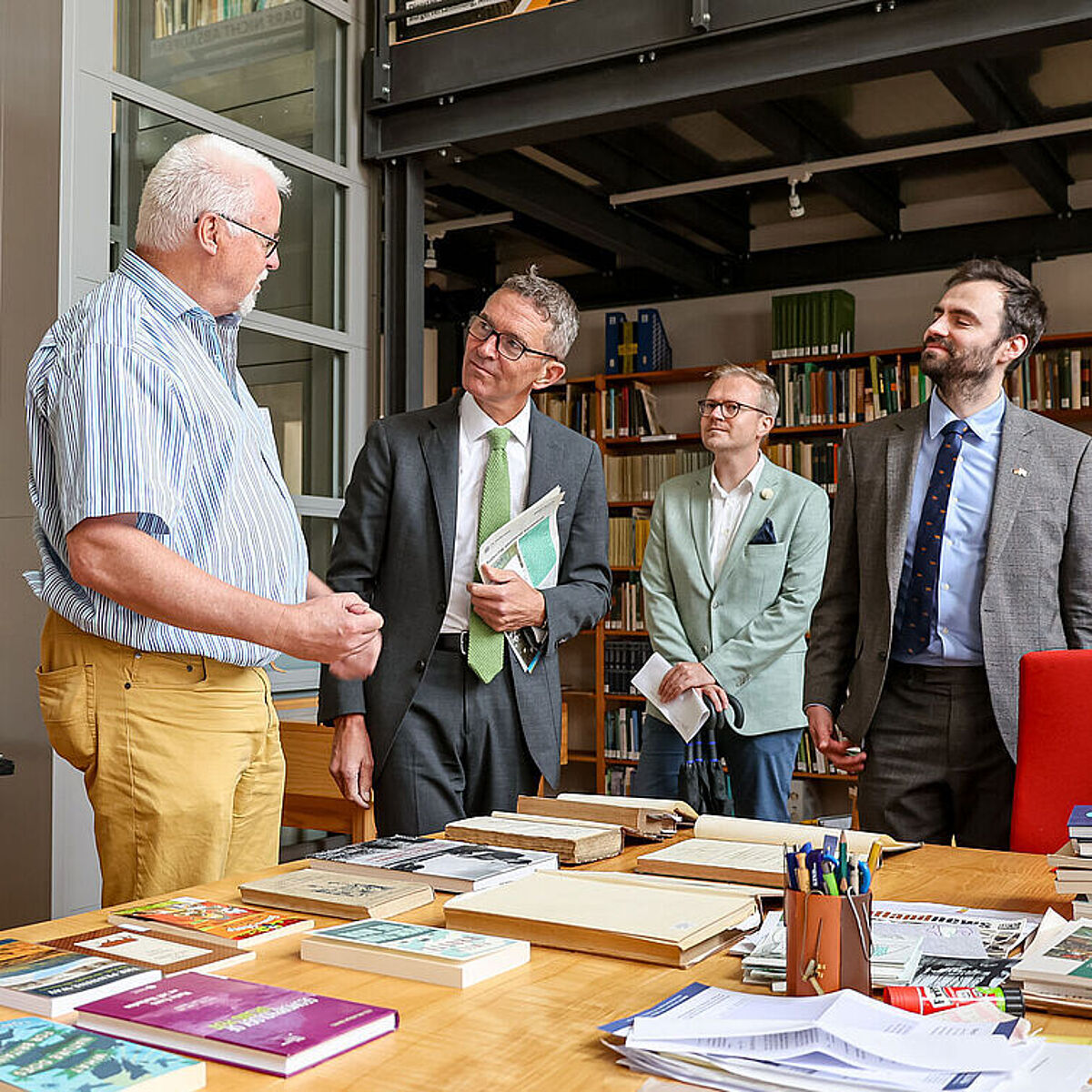
01.08.2025 – During a visit by UK Ambassador Andrew Mitchell to the University of Greifswald current developments in peatland research are presented: including the Collaborative Research Centre WETSCAPES2.0.
The exchange highlights the international dimension of research on rewetted peatlands and points to opportunities for future collaboration and knowledge transfer.
Peatland research in focus during Federal Environment Minister Schneider’s visit

04.07.2025 – Federal Environment Minister Carsten Schneider visits the Greifswald Mire Centre to gain insights into current research approaches to peatland rewetting. The visit also highlights ongoing work and future perspectives being developed within WETSCAPES2.0.
The focus of the visit is on methods for measuring plant biomass and greenhouse gas fluxes, as well as investigations of peat properties and key topics such as paludiculture, biodiversity, and peat formation.
First mesocosm experiment launches

04.06.2025 – Consortium members set up the WETSCAPES2.0 experiment “Rewetted Peat” at the Greifswald mesocosm facility. The experiment investigates how rewetted fens respond to extreme hydrological events such as droughts and flooding.
A total of 108 mesocosms were filled with peat and planted with the species Phragmites australis, Carex acutiformis and Carex rostrata. At the same time, samples are being collected to analyse microbial processes.
Within this controlled experimental setup, different water levels and extreme weather events will be simulated through 2026. The results will provide an important data foundation for the collaborative research centre.
Partners visit Polder Fuhlendorf

04.06.2025 – Members of the consortium meet with the Ostseestiftung and the Leibniz Institute for Baltic Sea Research Warnemünde (IOW) for a joint field visit to Polder Fuhlendorf. The drained coastal peatland is part of the ANK-funded project “Climate Protection in Coastal Peatlands” and is set to be restored through dyke realignment. Within WETSCAPES2.0, the site will be accompanied as a landscape-level experiment during this transformation.
The visit focused on aligning key research questions and preparing upcoming fieldwork. Discussions included the installation of measurement infrastructure and processes at the interface between peatland and coastal waters.
Kicking off WETSCAPES2.0
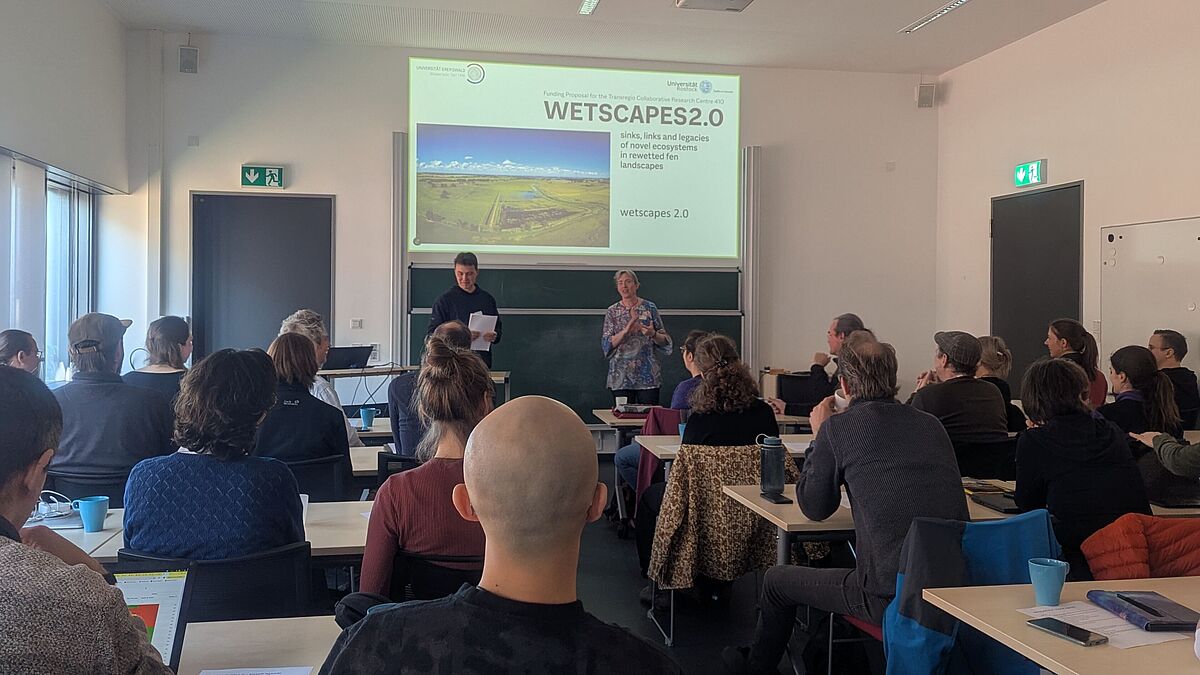

03.04.2025 – The Collaborative Research Centre officially started with a two-day kick-off meeting at the University of Rostock. More than 50 researchers from the eight partner institutions took part, including a large number of early career researchers. The meeting brought together researchers from across disciplines and marked the starting point for collaboration between the subprojects. The range of expertise involved highlights both the interdisciplinary nature and the complexity of the research programme.
A key element of the programme was a field excursion to one of the screening sites, where the first sensors for data collection on rewetted peatlands were installed - initiating the planned monitoring network of approximately 1,000 sensors.