
C5: Climate mitigation and adaptation potential of peatland rewetting
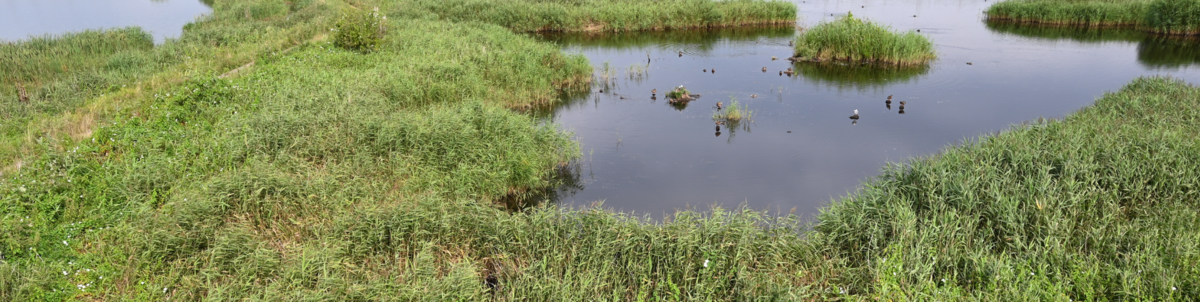
C5 aims to assess how rewetting temperate peatlands contributes to climate change mitigation and adaptation, accounting for both biogeochemical and biogeophysical processes.
Peatlands store exceptionally large amounts of carbon, but when drained, they become major sources of greenhouse gases. Globally, emissions from drained peatlands are estimated at around 1.9 Gt CO₂-equivalents per year and could cumulate to about 80 Pg C if no further areas are exploited. Rewetting can stop or strongly reduce these long-term CO₂ emissions, making it a key climate change mitigation option.
At the same time, the climate effects of rewetting go beyond greenhouse gas fluxes. Changes in vegetation and surface properties, such as albedo and roughness, alter energy, water, and momentum exchanges between land and atmosphere, influencing the climate from local to larger scales. In parallel, climatic changes, including more intense and frequent extreme events in hydrological conditions like water table depth, strongly affect peatland functioning, resilience, and net carbon balance.
C5 integrates peatland-specific vegetation, hydrological, and soil processes based on in-situ and remote sensing data into the dynamic global vegetation model JSBACH, using a cross-scale hybrid modelling framework. By linking greenhouse gas fluxes with biogeophysical land-atmosphere interactions, we enable comprehensive assessment of peatland rewetting impacts. Simulations under different climate scenarios are used to quantify the climate change mitigation potential, assess uncertainties, and evaluate the role of extreme and compound events, legacy effects, and possible adaptation strategies.
The project uniquely combines biogeochemical and biogeophysical perspectives within a modelling framework, integrating peatland-specific processes at multiple scales, and explicitly addresses the role of extreme events and long-term legacy effects.
Principal Investigators: Prof. Dr. Julia Pongratz, Dr. Wolfgang Obermeier
Doctoral Candidate: Katharina Raberg