

A1: Roots of fen peat formation
The peat of temperate fens is predominantly formed from roots and rhizomes of vascular plants and from brown mosses. These mosses, however, do not reappear well after rewetting. Root production and inhibition of their decomposition is therefore key to the understanding of peat formation and C and nutrient cycling in rewetted fen peatlands. Rewetting alters plant species composition towards wetland specialists with aerenchymatic roots. Through the aeration of the rhizosphere, these plants affect microbial composition and activity as well as key redox-driven peatland processes such as GHG production and nutrient cycling. These processes are essential for the formation of new organic deposits but may also affect the old peat.
A1 will:
Determine root production by ingrowth cores and decomposition by litterbags at all experimental levels of WETSCAPES2.0, and link them to abiotic and biotic drivers, contributing to the causal understanding of peat formation, GHG and nutrient cycling. If brown mosses occur, their production and decomposition will also be quantified.
Reach unprecedented temporal resolution in determining root dynamics by the use of automated minirhizotrones at Core Sites.
Continue existing long-term data series of root dynamics using manual minirhozotrons.
Participate in dedicated mesocosm experiments by quantifying plant production and litter decomposition to shed light on the importance of extreme hydrological events for root production.
Quantify the root exudation in relation to photosynthetic activity.
Explore decomposition of litter and peat over one decade.
Projektleitende:
Doktorandin:
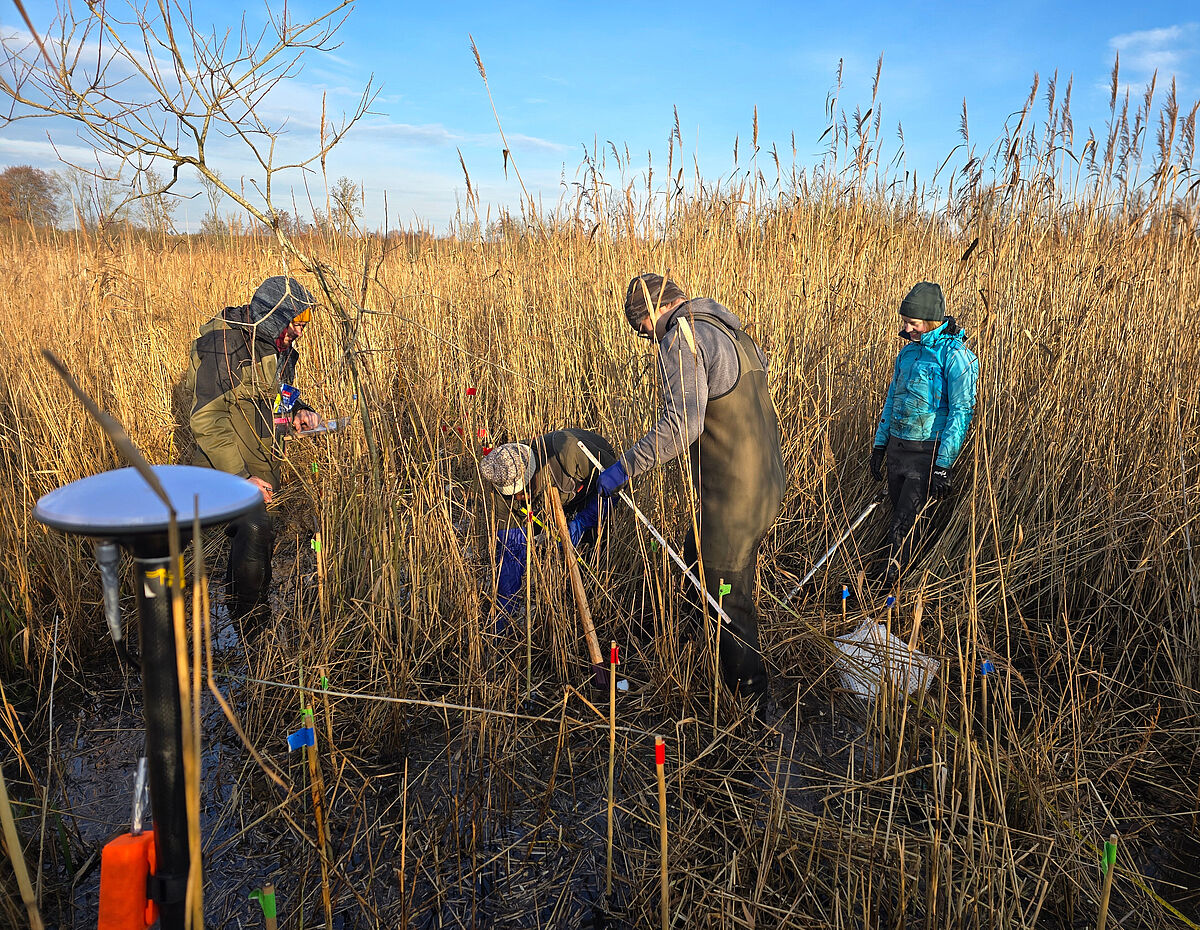
Photo: Installation of litterbags and ingrowth cores in one of the field sites. The precise location of all installations is marked and recorded. They will be exposed to the ambient conditions on the site for one year and then harvested.